
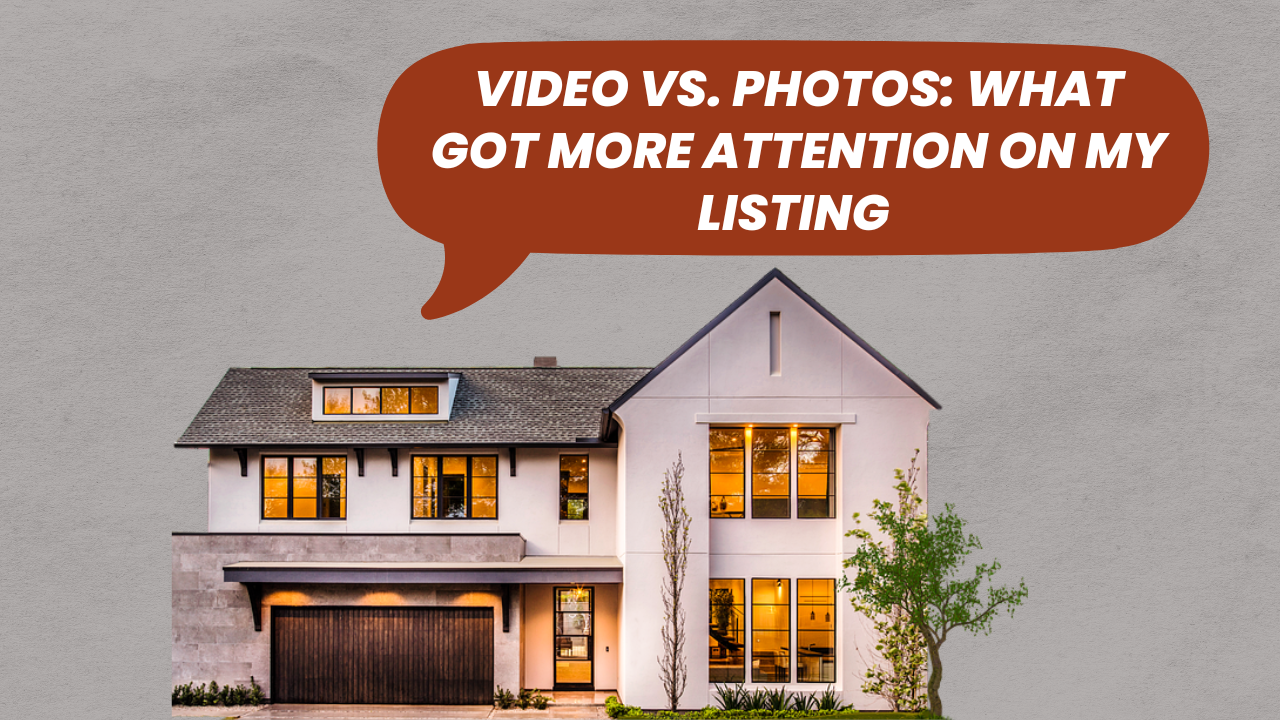

When I listed our house, my agent gave me two options for the marketing package: a standard photo shoot, or a bundle that included a walkthrough video and a handful of short vertical clips for social media.
I almost skipped the video option to save the extra cost, mostly because I assumed photos were still doing most of the heavy lifting the way they always had. I ended up saying yes to both, and looking back at the actual numbers afterward, I’m glad I did — because the split in attention between the two wasn’t close to what I expected going in.
What I Actually Had to Compare
To be clear about what I’m basing this on: the listing ran for eighteen days before we accepted an offer. My agent shared the analytics from the MLS listing page, the brokerage’s own site, and the Instagram and Facebook posts tied to the listing, so I had a reasonable spread of data rather than just one platform’s numbers.
I also asked a few people who toured the house what actually got them interested enough to book a showing, since raw view counts only tell part of the story.
Where Photos Still Won
First Impressions on Listing Portals
On the major listing sites, photos were still doing most of the initial work. The listing thumbnail people saw scrolling through search results was a photo, not a video thumbnail, and that’s what determined whether someone clicked in at all. No matter how good the video was, it never got a chance to prove itself unless the photo did its job first.
Total Time Spent, Photo by Photo
Once people clicked into the full listing, the photo gallery still accounted for more total time spent than the video, according to the breakdown my agent shared. People moved through individual photos slowly, especially kitchen and primary bathroom shots, often going back to specific images more than once.
That matched what a few showing visitors told me directly — several mentioned they’d looked closely at the kitchen photos multiple times before ever booking a tour.
Photos Drove the Decision to Click “Request a Showing”
This was the most useful thing I learned from asking people directly. Almost everyone who toured the house said photos were what convinced them the house was worth their time to actually visit. The video came up less often as the deciding factor for that first step, even among people who said afterward that they’d watched it.
Where Video Actually Outperformed Photos
Vertical Video Clips on Social Media
This is where the numbers surprised me most. The short vertical clips — fifteen to thirty seconds each, posted to Instagram and Facebook — pulled in noticeably more engagement per post than any single photo did, in terms of likes, shares, and comments.
One clip showing the backyard and the deck, in particular, got shared several times more than any individual photo post, mostly by people tagging friends who might be house hunting.
Watch-Through Rate on the Full Walkthrough Video
I expected a long walkthrough video to lose most viewers within the first thirty seconds, the way a lot of long-form content does. That’s not quite what happened. A meaningful share of people who started the full walkthrough stuck with it well past the halfway mark, according to the platform’s own view data, which suggests people who clicked into the video at all were already fairly serious about the house, not just casually scrolling past it.
Buyers From Out of the Area Relied on Video More Heavily
This one came up repeatedly when I asked people directly. A few of the more serious offers came from buyers relocating from out of state, and more than one of them specifically mentioned the video as what gave them confidence in the layout and flow of the house before ever booking a flight to see it in person.
Photos gave them a sense of individual rooms; the video gave them a sense of how those rooms actually connected to each other, which mattered more for people who couldn’t just casually swing by for a second look.
Video Held Attention Longer for Layout-Sensitive Buyers
A couple of people specifically brought up how the video helped them understand the transition between the kitchen and the living room, which is an oddly shaped, semi-open layout that’s genuinely hard to explain through still photos alone. That specific detail didn’t come up as a photo-driven realization for anyone I talked to. It only came up in reference to the video.
What Surprised Me Most
I went in assuming video would basically function as a bonus — nice to have, unlikely to move the needle much. What actually happened was more of a split by purpose than a straightforward win for one format over the other.
Photos got people to click in and decide the house was worth a visit. Video did more of the convincing for people already leaning serious, especially anyone who couldn’t easily just drop by in person.
I also didn’t expect the short vertical clips to outperform the full walkthrough as consistently as they did in terms of raw engagement. The full video mattered more for serious buyers doing real research.
The short clips mattered more for casual reach — the kind of person scrolling who wasn’t actively house hunting yet, but knew someone who was.
What I’d Do Differently Next Time
Front-Load the Photo Gallery Even More Carefully
Since photos are what get someone to click “request a showing” in the first place, I’d spend even more time on which photos lead the gallery, rather than treating photo order as an afterthought once the shoot was done.
Get the Vertical Clips Made Regardless of Budget
Given how disproportionately well those short clips performed relative to their cost, I wouldn’t skip them again even if I were trying to trim the marketing budget somewhere. They were the cheapest part of the package and arguably the highest return relative to what they cost.
Don’t Assume Video Is Wasted on Local Buyers
I went in assuming video mainly mattered for out-of-town buyers, and while that group did rely on it more heavily, several local buyers mentioned the video too, usually in the context of the layout question that photos alone didn’t answer well.
Final Thoughts
If I’d had to pick only one format, photos still would have been the safer choice, since they’re what actually gets a listing clicked on and taken seriously in the first place.
But treating video as optional would have meant losing real engagement from precisely the buyers who ended up being the most serious about the house — the ones doing real research instead of just scrolling.
The two formats weren’t really competing with each other in the end. They were doing two different jobs, and the listing worked better because both got done.
FAQs
Is a full walkthrough video worth the cost for every listing, or just higher-priced homes? It tends to matter most for homes with a layout that’s hard to explain through photos alone, or for markets likely to attract buyers relocating from elsewhere, regardless of price point.
Should photos or video go first in a listing description? Photos, generally, since that’s what most listing portals lead with and what tends to drive the initial decision to look further.
Are short vertical video clips worth doing even on a tight marketing budget? Based on what I saw, yes — they were the least expensive part of the package and had a disproportionately strong return in terms of reach and engagement.
Does video attention actually translate into more serious offers, or just more views? In my case, it leaned toward the former — the buyers who engaged most with the video tended to be further along in their decision-making, not just casually browsing.