
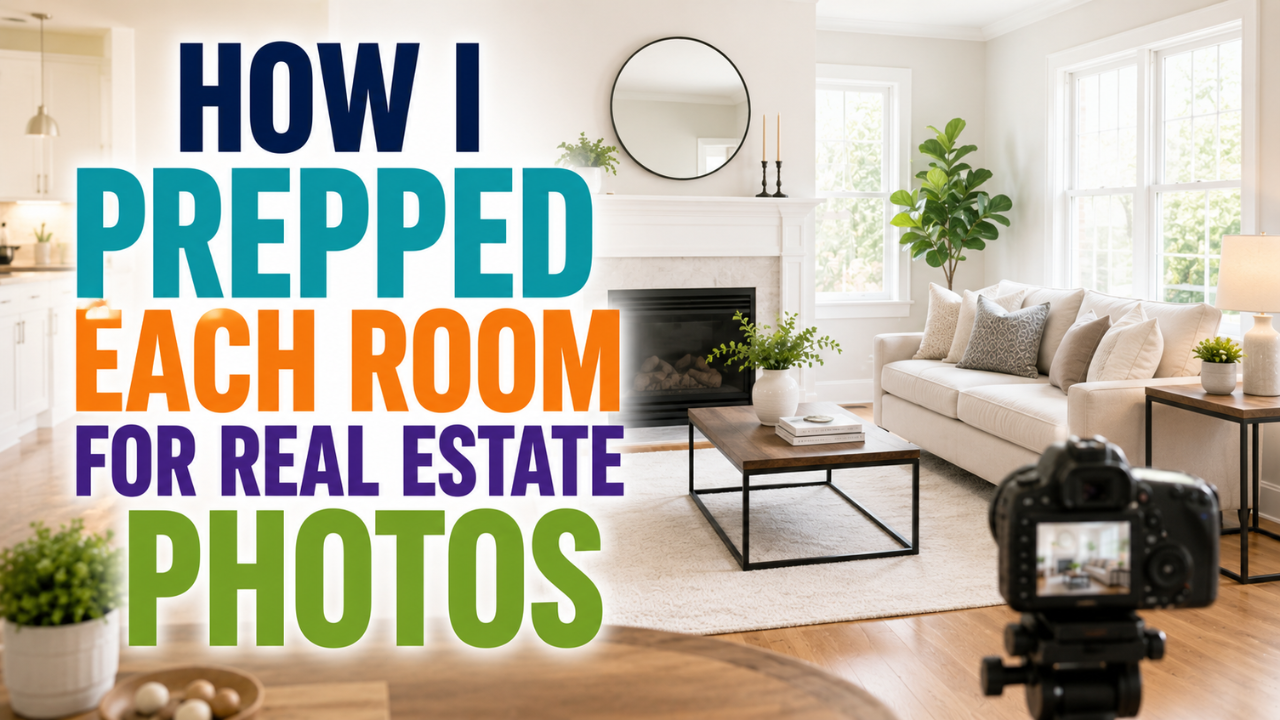
In ten years of shooting real estate listings, I’ve walked into homes that were staged down to the last throw pillow and homes where the sellers genuinely thought “we vacuumed” counted as photo prep. Both kinds of houses can photograph well, but only one of them makes my job easy — and after a decade behind the camera, I’ve learned exactly which small, unglamorous steps make the biggest difference between a listing that gets clicks and one that gets scrolled past. Here’s the room-by-room prep I walk sellers through before every shoot, plus a few things clients waste time on that never show up in the final photos.
Why Photo Prep Isn’t the Same as Showing Prep
The single biggest misconception I run into is that a house ready for a live showing is automatically ready for a camera. It isn’t. A wide-angle lens captures an entire room in one frame — ceiling corners, baseboards, reflections, cords — in a way the human eye simply glosses over when you’re walking through in person. A crooked lampshade or a smudge on a mirror is invisible to a buyer standing in the doorway.
Put it in a still image and it becomes the thing people notice first. I tell every seller the same thing before a shoot: the camera doesn’t see the room the way you do. It sees all of it, all at once, and it doesn’t forgive.
Living Room
I always ask sellers to pull furniture at least four inches off the walls before I arrive. It feels unnecessary standing in the room, but in a wide shot it reads as intentional depth instead of furniture crammed against the walls. Throw pillows are another common offender — I regularly see couches with seven or eight, and I ask sellers to get that down to three at most.
Beyond that number, a couch stops looking tidy and starts looking staged in a way buyers subconsciously distrust. I also have sellers turn on every lamp in the room in addition to the overhead light, even at midday. Lamp light adds warmth the camera picks up that ambient daylight alone doesn’t give you.
Kitchen
Countertops need to come down to almost nothing — a coffee maker and maybe one bowl of fruit, and that’s it. Kitchens are the room I see the most “invisible clutter” in: mail, a dish rack, a spice rack, things a homeowner stops seeing after a few years but that jump out immediately in a still photo.
I also always ask for the faucet and any stainless appliances to be wiped down right before I shoot — fingerprints and water spots that are invisible under normal daylight show up clearly under studio lighting. And I ask sellers to open blinds fully rather than tilting them halfway for privacy, since full light through a window measurably widens how large a kitchen reads in a photo.
Bedrooms
Hotel corners on every bed, every time. A slightly rumpled bedspread reads as lived-in to a person standing in the room, but in a photo, where there’s nothing else competing for attention, it reads as unmade. I also ask sellers to clear personal photos off nightstands and dressers before I shoot. It’s not about privacy — it’s about giving buyers a blank canvas to picture their own life in the space instead of someone else’s.
Bathrooms
Toiletries, toothbrushes, anything personal — all of it goes into a cabinet before I arrive. I usually recommend leaving just a single folded towel and, if the seller has one, a small plant on the counter. Bathrooms already photograph small, so any visible personal item pulls focus out of proportion to its actual size in the room.
And yes, I always ask sellers to close every toilet lid before a shoot. I bring it up on almost every job, which tells me it’s one of the most commonly missed details in the industry.
Exterior and Curb Appeal
I ask for the lawn to be mowed the morning of the shoot, not the day before — even one day of growth is visible in a wide exterior shot, especially in the golden-hour light I usually shoot in. Driveways need to be completely clear, not just cars pulled to one side; an empty driveway keeps the house itself as the clear subject of the photo instead of competing with vehicles.
Small things like a coiled garden hose and trash bins put away make a bigger visual difference in an exterior shot than most of the landscaping work sellers spend money on.
What Sellers Waste Time On
The most common thing I see sellers over-prepare is the inside of cabinets and closets. Unless a client has specifically requested a walk-through video, I’m not shooting inside cabinets, and I’ve had sellers tell me afterward they spent an hour deep-cleaning a pantry that never appeared in a single frame. If you’re short on time before a shoot, that hour is almost always better spent on the exterior, where every shot counts.
A Working Checklist I Give Every Client
- Pull furniture off walls by a few inches for a sense of depth
- Limit decorative pillows and throws to three per couch, no more
- Turn on every lamp in addition to overhead lighting, even in daylight
- Clear countertops to one or two intentional items only
- Make beds with hotel corners and remove personal photos
- Hide personal toiletries and close every toilet lid
- Mow the lawn the morning of the shoot, not the day before
- Clear the driveway completely and put away hoses and bins
- Skip deep-cleaning cabinets and closets unless a video walk-through is planned
I’ve shot houses that sold within days of listing and houses that sat for months with nearly identical square footage and finishes — and more often than not, the difference traces back to fifteen minutes of prep in each room before I ever picked up the camera. It’s the cheapest, fastest lever a seller has, and it’s the one I see skipped the most.

