

The Pixels vs. Property Dilemma
A buyer scrolls past your listing photo at 11 p.m. The room glows. The furniture is perfectly scaled, the light is warm, and the click happens in under two seconds.
Three days later, that same buyer stands in the actual room. It’s empty. The echo is loud. The “warm light” was a rendering choice, not a lamp.
That gap between the photo and the floor is the entire staging argument in miniature. Virtual staging wins the click. Physical staging wins the room. The real question isn’t which one is better — it’s which one is doing the job you actually need done at that stage of the sale.
Section 1: The Virtual Staging Breakdown (The Software Route)
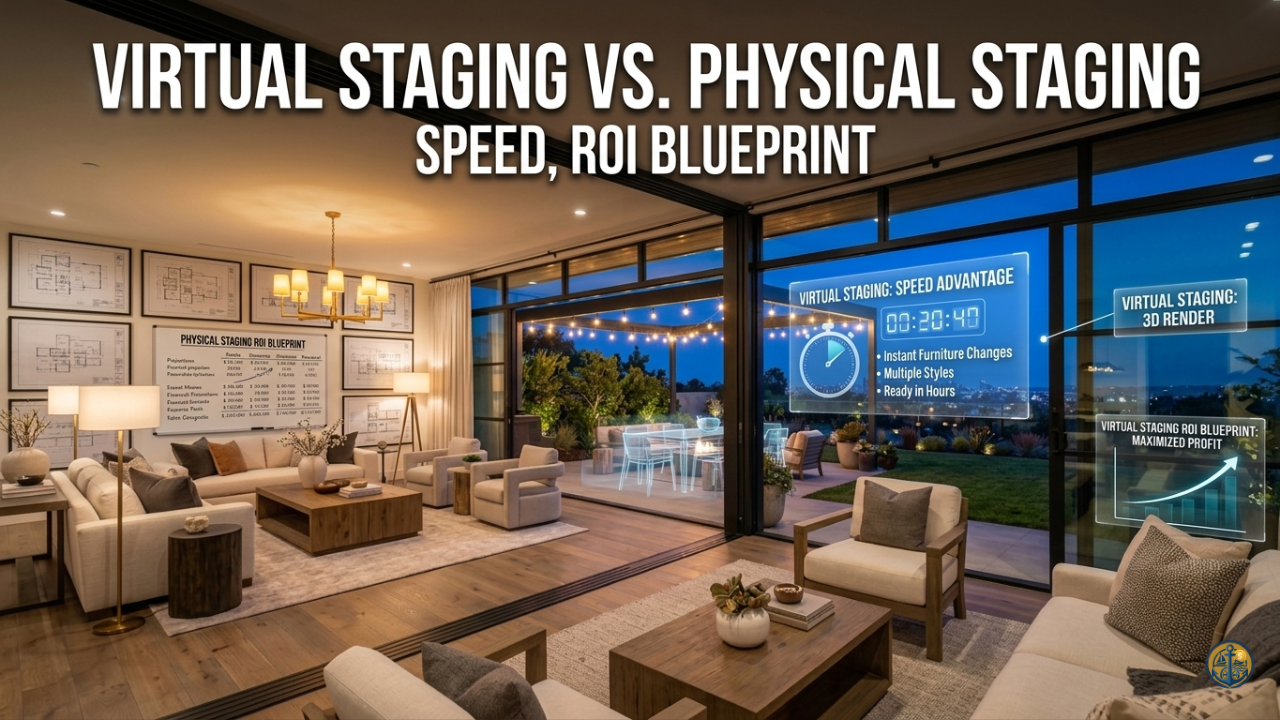
Virtual home staging software takes empty or outdated room photos and digitally furnishes them using 3D digital rendering. A designer (or increasingly, an AI-assisted pipeline) drops in furniture, rugs, art, and lighting onto an existing photo of the real space.
What it does well:
- Cost. Most vendors charge per image, and it’s genuinely pennies compared to renting a couch. A fully staged room photo typically lands in the same range as a decent lunch out.
- Speed. Standard turnaround is 24–48 hours. Rush orders can come back same-day.
- Flexibility. The same empty room can be staged in five different styles — modern farmhouse, mid-century, Scandinavian minimal — without moving a single physical object. If a buyer’s agent says the style isn’t landing, you swap it and re-list the photo the next morning.
The trap: The Walkthrough Letdown
This is the single biggest risk in virtual staging, and it’s the one sellers underestimate. A buyer builds an emotional attachment to a photo. They picture their life in that rendered room. Then they walk into a space that is bare, cold, and acoustically hollow — footsteps echo, voices bounce, and the “cozy” feeling from the photo simply isn’t there.
That mismatch doesn’t just disappoint. It plants doubt. If the furniture in the photo wasn’t real, buyers start wondering what else about the listing was polished past reality. Some agents report this directly suppresses offer confidence, even when the buyer knows, rationally, that staging photos are staging photos.
The listing photo click-through rate goes up. The in-person conversion can quietly go down if the gap between image and reality is too wide.
Section 2: The Physical Staging Breakdown (The Real Furniture Route)
Physical staging is exactly what it sounds like: real furniture, real rugs, real art, delivered and arranged by a staging company, sitting in the house during showings.
Why it works on a level virtual staging can’t touch:
- Scale, live. A buyer doesn’t have to imagine whether their sectional fits — they’re standing next to a real sofa in the real room, getting instant, trustworthy scale information.
- Camouflage. A well-placed rug hides scuffed flooring. A strategically hung mirror distracts from an awkward wall seam. Physical staging solves cosmetic flaws in ways a photo edit never touches, because the buyer is in the room, not looking at a screen.
- Acoustics and warmth. Soft furnishings absorb sound. An empty house without them sounds hollow and feels institutional the moment someone speaks. Furniture fixes that instantly, and buyers feel the difference even if they can’t name why.
The real costs:
- Upfront investment. Furniture rental for a full home typically runs into the thousands per month, not per photo.
- Logistics. Delivery windows, warehouse storage, and pickup all have to be scheduled around showings — and around each other.
- Damage and wear risk. Rented furniture gets scuffed, floors get scratched during moves, and stagers build that risk into their pricing.
Section 3: The Head-to-Head Structural Blueprint
| Metric | Virtual Staging | Physical Staging |
|---|---|---|
| Average Cost Per Room | $30–$150 per photo | $500–$800+ per room, per month |
| Production Time | 24–48 hours | 1–3 weeks (sourcing, delivery, setup) |
| Online Visual Impact | Extremely high — fully customizable, polished, consistent lighting | High, but limited by real furniture availability and photography skill |
| In-Person Walkthrough Experience | None — the room is still empty | Strong — buyers physically feel scale, warmth, and sound absorption |
| Best Suited For | Vacant listings, pre-market photos, secondary rooms, quick style testing | Occupied high-traffic showings, luxury listings, hero rooms buyers linger in |
Section 4: The Strategic Hybrid Approach
The highest-performing listings rarely pick a side. They allocate budget the way a media buyer allocates ad spend — put money where the attention actually converts.
Virtually stage the rooms that don’t carry the showing:
- Unfinished basements
- Outdated secondary bedrooms
- Bonus rooms with unclear purpose (office? gym? nursery?)
These rooms exist mainly in photos anyway. Most buyers spend seconds on them during a walkthrough, so a rendering does the job at a fraction of the cost.
Physically stage the Hero Rooms:
- The main entry — first physical impression, sets emotional tone
- The primary living space — where buyers imagine themselves actually living
- The primary bedroom — the room most tied to emotional purchase decisions
This hybrid model keeps the total staging bill down while making sure the rooms buyers actually stand in and linger in are the ones doing real, physical, sensory persuasion work. It’s the difference between staging for the scroll and staging for the signature.
FAQ
Is virtual staging obvious to home buyers? Sometimes. Poor renderings show telltale signs — shadows that don’t match the room’s real light source, furniture that looks slightly too clean or too perfectly aligned. High-quality rendering is increasingly hard to spot, but savvy buyers now check for it as a matter of habit.
Do you have to disclose virtual staging on MLS listings? Most MLS boards require a disclosure, typically a small watermark or caption noting the image is “virtually staged.” Rules vary by region, so check your local MLS policy before listing.
What is the average cost difference between virtual and real staging? Virtual staging runs roughly $30–$150 per room image. Physical staging runs $500–$800+ per room, per month. The gap is typically 10–20x in favor of virtual staging on raw cost.