
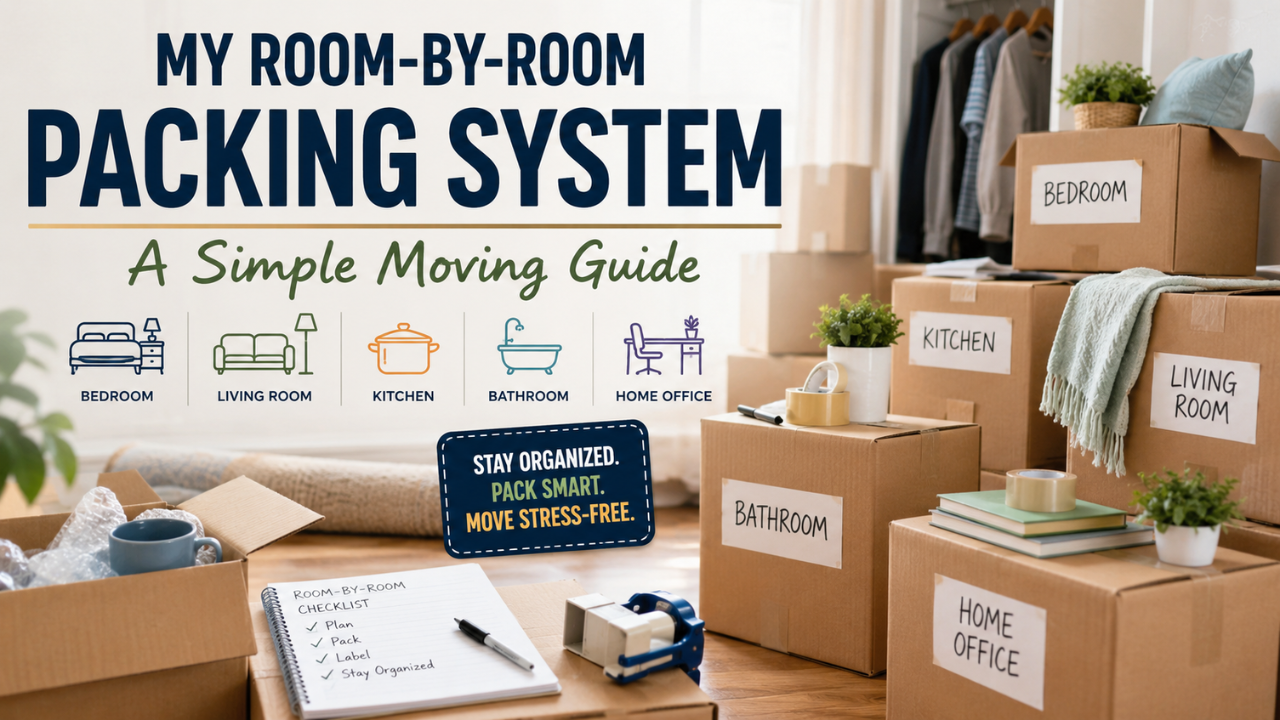
Packing always looks simple until you’re actually in it — boxes everywhere, half-labeled, and that one box that somehow ends up with a lamp, three books, and a frying pan in it. Nothing wrong with any of those items individually, they just have no business being in the same box.
At some point, a plain room-by-room approach just makes more sense than the “grab whatever’s nearby” method. It’s not complicated, but having an actual system — instead of winging it — makes unpacking so much easier on the other end. Here’s how I break it down.
Start With the Rooms You Use Least
The instinct is to start wherever feels easiest, but the smarter move is starting with rooms you don’t use daily — a guest room, a storage closet, a formal dining room you eat in twice a year. Packing these first doesn’t disrupt your day-to-day routine, and it gets a chunk of the work done before things get hectic.
Pack One Room at a Time, Fully
It’s tempting to bounce between rooms, packing a little here and there. But finishing one room completely before moving to the next keeps boxes organized by content instead of becoming a mixed grab bag. It also gives you a clear sense of progress — a fully packed room feels like real momentum in a way that a dozen half-packed rooms doesn’t.
Label Boxes by Room, Not Just Contents
Writing “kitchen” on a box is useful. Writing “kitchen — pots, pans, cutting boards” is more useful. On moving day, movers or helpers can put boxes directly into the right room without you having to direct every single one, and unpacking becomes a matter of working through one room’s boxes at a time instead of hunting through everything for what you need.
Pack Heavy Items in Small Boxes, Light Items in Big Boxes
This sounds obvious written out, but it’s easy to forget in the moment. Books, for instance, are deceptively heavy — a large box full of books becomes genuinely hard to lift and prone to the bottom giving out. Small boxes for heavy, dense items; larger boxes for lighter things like linens or pillows, where size doesn’t translate to unmanageable weight.
Keep a Box of Essentials Separate From Everything Else
This is the one box that doesn’t get sealed and stacked with the rest — it stays accessible through the entire move. Toiletries, a change of clothes, phone chargers, basic tools, any medication, and anything else you’d want within reach on move-in night when everything else is still in boxes. Skipping this step means digging through a wall of boxes at 9 p.m. looking for a toothbrush.
Take Photos Before Disassembling Furniture
For anything with cables, multiple parts, or a specific assembly (shelving units, bed frames, desks with cord management), a quick photo before taking it apart saves real time on the other end. It’s a lot easier to reference a photo than to reverse-engineer how something went together from memory a week later.
Wrap Fragile Items Individually, Not in a Pile
It’s tempting to nestle a bunch of dishes or glasses together with paper stuffed around the group. Individually wrapping each fragile item, even if it takes longer, dramatically reduces the odds of something cracking against its neighbor during transport. Dish towels, clothing, or actual packing paper all work for this if you’re trying to avoid buying too much extra material.
Keep an Inventory List as You Go
This doesn’t need to be elaborate — even a simple running list of what’s in each numbered or labeled box helps enormously if something goes missing, or if you’re trying to locate one specific item without unpacking five boxes to find it.
Pack a Clear Plan for Closets and Clothes
Wardrobe boxes, if you can get them, let you move hanging clothes without folding or unhanging everything, which saves a surprising amount of time on both ends. If wardrobe boxes aren’t in the budget, garbage bags pulled up over groups of hanging clothes (with the hangers still poking through the top) work as a reasonable substitute.
Why Room-by-Room Beats Winging It
The main benefit isn’t really about the packing itself — it’s about unpacking. A move organized room by room means you’re not sorting through a chaotic mix of boxes trying to figure out where everything goes. You bring the kitchen boxes to the kitchen, open them, and you’re mostly done with that room. It turns an overwhelming process into a series of smaller, more manageable ones.
Final Thoughts
None of this makes packing fun, exactly, but a system does make it a lot less chaotic. Working room by room, labeling clearly, and keeping an essentials box handy are small habits that add up to a much smoother move-in day — and a lot less digging through mystery boxes trying to find where the can opener ended up.
FAQs
How far in advance should I start packing? It depends on the size of the home, but starting a few weeks ahead with the least-used rooms gives you a manageable pace instead of a last-minute scramble.
Should I use the same size boxes for everything? No — matching box size to weight (small boxes for heavy items, larger ones for light items) makes both packing and lifting safer and easier.
Is it worth paying for wardrobe boxes? For a full closet’s worth of hanging clothes, they can save a lot of time and effort. For a smaller amount, the garbage bag method works fine as a lower-cost alternative.
What’s the best way to keep track of what’s in each box? A simple system — numbered boxes with a matching written or digital inventory list — is usually enough without needing anything more complicated.

