
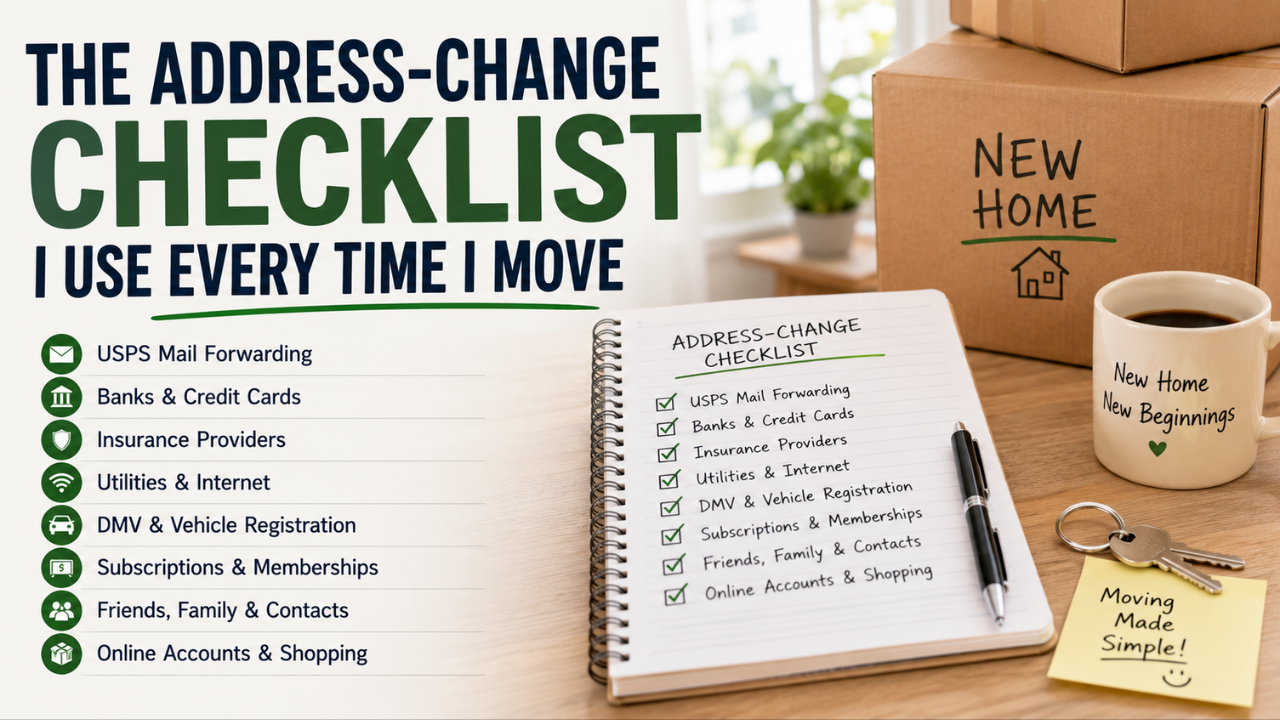

Updating your address always seems like it should be a one-and-done task — fill out a form, forward the mail, move on. Then a bill shows up at your old place two months later, or a package gets stuck in limbo because one account still has the wrong details. Turns out there isn’t one single place that updates everything; it’s more like a dozen smaller updates scattered across different accounts.
So I keep a running checklist now, and I go through it methodically every time instead of trying to remember it all from scratch. Here’s what’s on it.
Start With USPS Mail Forwarding
This is the safety net, not the whole solution. Setting up mail forwarding through USPS catches anything you forget to update directly, at least for a while. It’s usually done online in a few minutes, and it’s worth doing as early as you reasonably can before the move, since it can take a few days to activate.
Update Your Driver’s License and Vehicle Registration
Most states have a required window — often 30 days or so — for updating your address on your license after a move, and vehicle registration usually needs updating too. Requirements vary by state, so it’s worth checking your specific state’s DMV site rather than assuming, since deadlines and required documents differ.
Banks and Credit Cards
Every bank account, credit card, and any loan accounts need the address updated individually. Most can be done through the website or app now without a phone call, but it’s easy to forget a secondary card or an old savings account you don’t check often — worth going through your full list deliberately rather than relying on memory.
Employer and Payroll
Your employer needs your current address on file, both for general correspondence and for tax documents later. This is an easy one to overlook simply because it doesn’t feel urgent, but it matters when W-2s or other paperwork go out.
Insurance Providers
Health insurance, auto insurance, renters or homeowners insurance — all of these need updating, and for auto and home insurance specifically, your address can actually affect your rate, so it’s not purely administrative. Worth updating promptly rather than letting it lag.
Subscriptions and Recurring Deliveries
Streaming services generally don’t care where you live, but anything that ships physical items — subscription boxes, meal kits, prescription deliveries — needs the new address updated directly in each account, since USPS forwarding doesn’t always apply cleanly to certain shipping carriers.
Voter Registration
Updating your voter registration ensures you’re assigned to the correct polling location and district. It’s often easy to forget since it’s not tied to daily life the way bills or banking are, but it matters especially if a move happens close to an election.
Utility Companies — Both Ends
Two directions here: stopping or transferring service at your old address, and setting up new service at your new one. Electric, gas, water, internet, trash pickup — worth making a list of every utility you currently have and confirming both the shutoff and setup dates line up with your actual move timeline.
Doctors, Dentists, and Other Providers
Medical and dental offices, veterinarians if you have pets, any regular providers — these often get missed because they’re not billed monthly the way subscriptions are. Worth a quick call or online update to each, especially if you’re not switching providers and want records and correspondence to follow you.
Amazon and Other Frequent Online Retailers
Beyond just the shipping address, some retailers store multiple saved addresses, and it’s easy to accidentally ship something to an old default. Worth double-checking saved address books on any site you order from regularly, not just updating the most recent one.
Friends and Family
The least official item on the list, but easy to forget in the middle of everything else. A quick group text or email with your new address saves confusion later when someone’s trying to mail a card or drop something off.
Why I Go Through This as an Actual List
The honest reason is that address updates are exactly the kind of task that feels done after the big ones (USPS, license, banks) but quietly isn’t. Going through a written list, rather than trusting memory, is the only way I’ve found to actually catch everything — including the accounts you don’t think about until something goes wrong with them.
Final Thoughts
None of these individual updates take long, but there are more of them than people expect, and they’re spread across enough different places that skipping the checklist approach usually means missing a few. Working through it methodically, ideally starting a couple of weeks before the move and finishing up shortly after, is the difference between a clean transition and mail and accounts trickling in wrong for months.
FAQs
How soon before moving should I start updating my address? Some things, like USPS forwarding, are best set up shortly before the move. Others, like notifying your employer or updating subscriptions, can be done a few weeks ahead without issue.
Does USPS mail forwarding cover everything automatically? No — it’s meant as a temporary safety net for a limited period, not a permanent solution. Accounts and services still need to be updated directly.
What happens if I don’t update my driver’s license address in time? This varies by state, but many states have specific deadlines and potential penalties for not updating your address within a set window after moving, so it’s worth checking your state’s specific rules.
Is there one service that updates everything at once? Not reliably. Some third-party services claim to handle multiple updates for you, but going through key accounts individually is generally the more reliable way to make sure nothing gets missed.