

A few years back, I walked into a house for a listing photo shoot. The kitchen counters were covered in mail, coffee mugs, and kid’s homework. The living room had three couches crammed into one small space. I could not find one clean angle to shoot. That house sat on the market for 68 days. The house next door, staged and clutter-free, sold in 9 days.
Decluttering before you sell is the fastest, cheapest way to make your house look bigger, brighter, and more valuable to buyers. It costs almost nothing. It just takes time and a plan. This guide gives you that plan, step by step.
Why Buyers (and Camera Lenses) Care About Less Stuff
Buyers do not want to see your life. They want to picture their own life in your space. Every extra box, every stack of magazines, every crowded shelf gets in the way of that picture.
Clutter makes rooms look smaller than they are. This is true in person and it is even more true in photos. As a photographer, I know a wide-angle lens will show every messy pile in the frame. It cannot hide anything.
Here is what I see clutter do to listing photos:
- It shrinks the room. Full shelves and stacked furniture eat up visual space.
- It distracts the eye. Buyers should look at your countertops, not your countertop appliances.
- It kills the “wow” moment. Empty, clean spaces feel open and full of potential.
During an open house, the same rules apply in real life. A real estate agent can talk up your home’s features all day long. But if potential buyers are stepping over shoes and boxes, they will remember the mess, not the crown molding.
Step-by-Step Decluttering Plan (Mark’s Practical Guide)
Step 1: The “Three Box” Rule
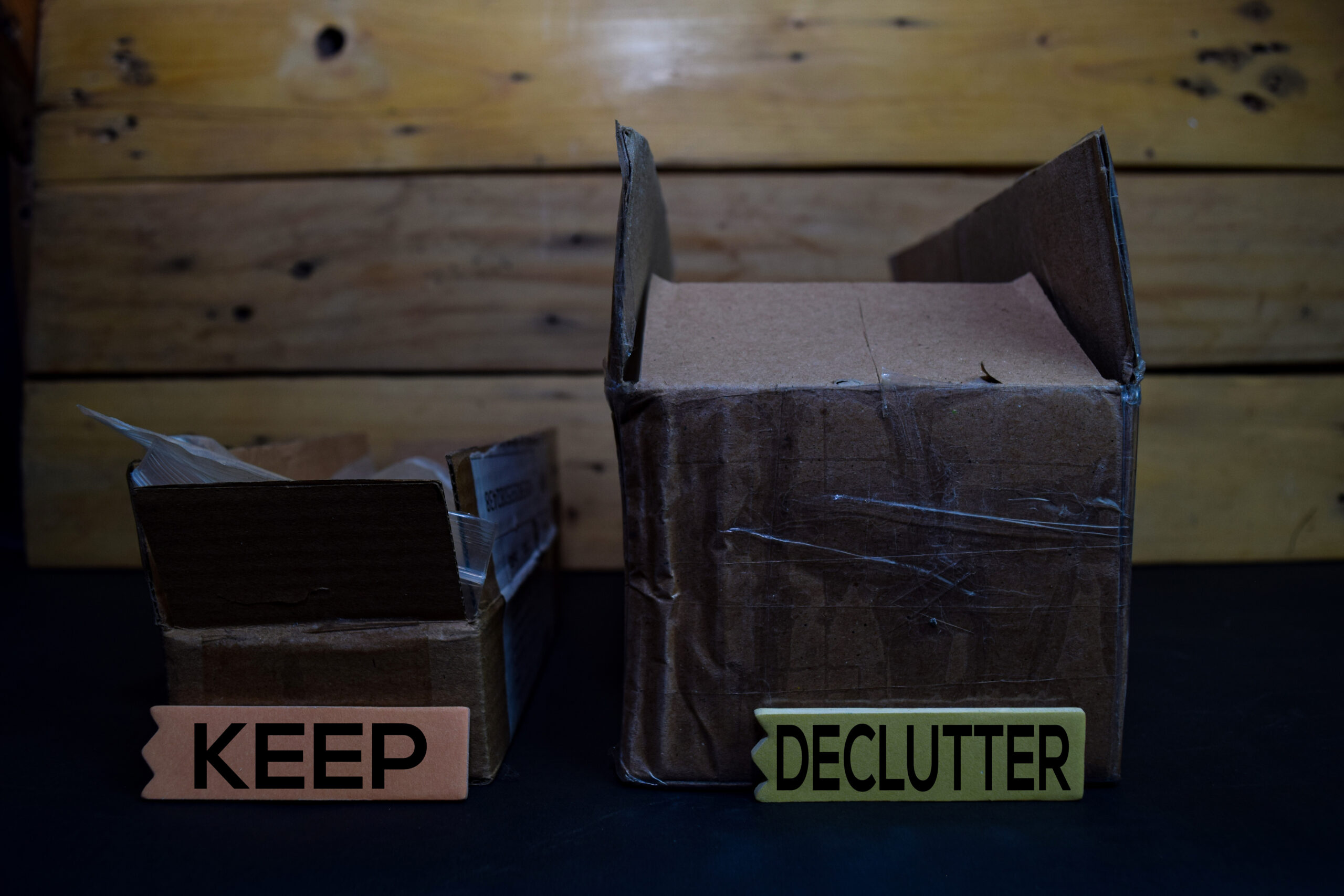
Before you touch a single closet, grab three boxes or bins. Label them Keep, Donate, and Trash. Every item you pick up goes into one of these three boxes. No exceptions, no “maybe” pile.
When I sold my own place, I had a garage full of old paint cans, half-used tools, and extension cords I forgot I owned. I set a timer for 20 minutes and forced myself to sort fast. I kept the tools I used often, donated the extras to a neighbor, and trashed the dried-up paint cans. My garage looked twice as big in an hour.
The rule works because it stops you from overthinking. You touch it, you decide, you move on. Speed beats perfection here.
Step 2: Room-by-Room Guide
Go room by room. Do not jump around the house, or you will lose steam fast.
Kitchen Clear every countertop except one or two nice items, like a fruit bowl or a coffee maker. Buyers open cabinets, so pull out anything you do not use weekly. Wipe down shelves as you go, since this doubles as your deep cleaning.
Closets Potential buyers always open closets. They are checking storage space, not judging your wardrobe, but a packed closet still reads as “not enough room.” Cut your closet contents by half. Pack off-season clothes into bins and store them out of sight.
Garage and Basement These rooms turn into dumping grounds over the years. Sort tools, sporting gear, and holiday decorations into the three-box system. If you plan to keep a lot of it, this is a good place to think about packing supplies early, since you will need them soon anyway.
Step 3: Managing the Sentiment
Some items are hard to let go of. Kids’ art, old photos, gifts from family. These slow people down more than anything else.
Set these items aside in a separate “sentimental” box and do not sort them during your main declutter session. Deal with them last, on their own day, when you are not rushing. This keeps emotion from stalling your whole project.
A trick I give homeowners: take a photo of the item before you decide its fate. You keep the memory without keeping the object taking up space.
What to Do with the Excess Stuff
Once your three boxes are full, you need a plan for each one.
- Storage unit: Rent a small storage unit for furniture and boxes you want to keep but do not need on display. This is the fastest way to clear a room for photos.
- Donating items: Local charities often pick up furniture and household goods for free. Donating items clears space and can help at tax time too.
- Selling extras: Use local apps or a yard sale to sell things in good shape. This puts a little cash back in your pocket for moving costs.
- Trash and recycling: Broken items, expired products, and worn-out furniture just need to go. Do not pack junk to move it twice.
A storage unit is often the smartest move if you are decluttering to sell. It gets bulky items fully out of the house instead of just shifting them to the garage.
Final Touch for Curb Appeal
Buyers judge your home before they even open the front door. Curb appeal is the first impression, and clutter outside hurts just as much as clutter inside.
Before your real estate agent shows up to take photos, walk your yard and porch:
- Put away garden tools, hoses, and toys
- Clear the porch of extra furniture, mats, or planters
- Sweep the driveway and walkway
- Tuck trash cans and recycling bins out of sight
A clean, open entryway tells buyers the whole house is cared for. It sets the tone before they even step inside.
Conclusion and Quick Checklist
Decluttering is not about making your house look empty. It is about making it look ready for someone else’s life to start there. A clear, open space photographs better, shows better, and sells faster.
Here is your quick checklist.
[ ] Set up your three boxes: Keep, Donate, Trash
[ ] Clear kitchen counters down to one or two items
[ ] Cut closet contents by half
[ ] Sort the garage and basement
[ ] Set sentimental items aside for a separate day
[ ] Rent a storage unit for extra furniture and boxes
[ ] Donate or sell items you no longer need
[ ] Clear the porch, yard, and driveway for curb appeal
Work through this list room by room, and your house will show better for every open house and every listing photo. That is how you sell faster, and often for more.