
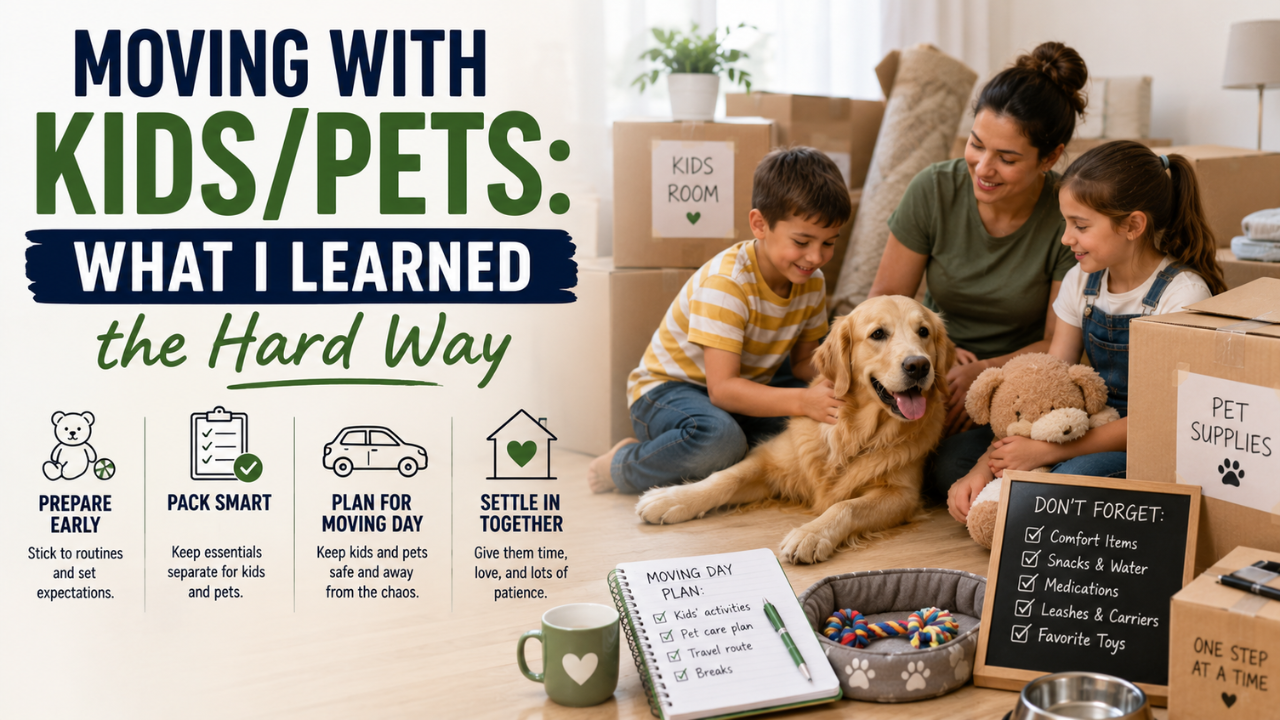
I thought I’d planned our move well. Boxes labeled, movers booked, timeline mapped out to the day. What I hadn’t planned for was how differently the whole thing would go with a toddler and an anxious dog in the mix. Packing boxes is a logistics problem. Moving with kids and pets is closer to a logistics problem wrapped inside an emotional one, and I learned that distinction the hard way, more than once.
Here’s what actually helped, and what I wish I’d known before the truck showed up.
The Mistake I Made First: Treating It Like Any Other Move
For the first week of packing, I ran the process exactly like I would have solo — boxes everywhere, furniture disassembled early, the house in visible disarray for days at a stretch. It didn’t occur to me how unsettling that would be for either my daughter or the dog until I had a toddler asking why her room looked “broken” and a dog who wouldn’t eat for two days straight. Kids and pets don’t read a moving timeline. They just see their environment falling apart, with no explanation attached.
What Worked for the Dog
Keeping One Room Completely Normal Until the End
Instead of packing the whole house evenly, I left one room — hers, in this case, the dog’s usual spot near the living room — completely untouched until almost the very last day. Same bed, same bowls, same everything. It gave her one consistent space through a week of the rest of the house changing around her, and it noticeably cut down on the pacing and whining that had started early on.
A Familiar-Smelling Item for the New House
Before we ever moved anything in, I brought over a blanket she’d been sleeping on and left it in a corner of the new place. Small thing, but having something that already smelled like home waiting there seemed to take the edge off the first night more than I expected it to.
Boarding Her for Moving Day Itself, Not the Whole Process
I debated boarding her for the entire move and I’m glad I didn’t — the disruption of being gone the whole time seemed like it would have been worse. What worked better was just boarding her for the single chaotic day of the actual move, with strangers in and out and doors propped open constantly, and bringing her back once the truck was gone and the house was quiet again.
What Worked for the Toddler
Giving Her a Job
This sounds small, but it mattered more than almost anything else. I gave her a designated “moving box” — a bin that was hers to pack and carry herself, with a few toys and books she picked. Having something concrete to be in charge of, instead of just watching adults move everything around her, changed her whole attitude about the process.
Talking About It Way Before It Made Sense To
I started mentioning the move weeks before it was really necessary, in short, casual ways — pointing out the new house in passing, mentioning her new room would have a window like this one. I don’t think she fully understood it early on, but by moving day it wasn’t a surprise anymore, and that seemed to matter more than I expected for someone that young.
Setting Up Her Room First, Not Last
Against every instinct about efficient unpacking, I set up her room completely before touching almost anything else in the new house. Bed made, a few familiar toys out, curtains up. It meant the rest of the house could stay in boxes for days without it feeling chaotic to her, because her actual space was already finished and normal.
What I’d Do Differently Next Time
Not Underestimating the First Few Nights
I expected the move itself to be the hard part. It wasn’t. The first three or four nights afterward were harder than the move, with both the dog and my daughter more unsettled than during the packing and driving itself. I’d build in more patience for that stretch next time instead of assuming things would settle immediately once we were physically in the new house.
Keeping Routines Rigid, Not Relaxed
My instinct during the chaos was to relax bedtime, mealtimes, and walk schedules, figuring everyone needed some slack given the circumstances. In hindsight, the opposite would have helped more. Keeping the actual routines as consistent as possible, even while everything around them was in flux, would have given both of them more stability than the leniency did.
Prepping Neighbors or a Sitter in Advance
Moving day itself was overwhelming for both of them in ways I hadn’t fully planned for, and I ended up scrambling to find someone to watch my daughter for a few hours mid-move. Lining that up in advance, rather than assuming we could manage everyone through the actual moving day, would have saved a genuinely stressful afternoon.
Final Thoughts
Nothing about this made the move logistically harder in any big way. What it changed was how much emotional bandwidth the whole process took, on top of the physical work of it. Boxes and a truck are the easy part. Keeping two very different kinds of family members steady through a week of disruption turned out to be the actual project.
FAQs
How far in advance should I start preparing a toddler for a move?
A few weeks of casual, low-pressure mentions seems to work better than either a last-minute explanation or a long, detailed conversation too far ahead for it to feel real yet.
Is it better to board a pet for the whole move or just moving day?
It depends on the animal, but keeping disruption to a minimum by boarding only for the most chaotic single day, rather than the entire process, tends to cause less added stress.
Should routines change during a move to make things easier on kids and pets?
Generally no — keeping meal times, bedtimes, and walk schedules as consistent as possible provides more stability than relaxing them, even though relaxing feels like the more compassionate choice in the moment.
How long does it typically take a child or pet to settle into a new home?
It varies, but the first several days after the move are often harder than the move itself, so it’s worth expecting an adjustment period rather than assuming things will feel normal immediately.

