
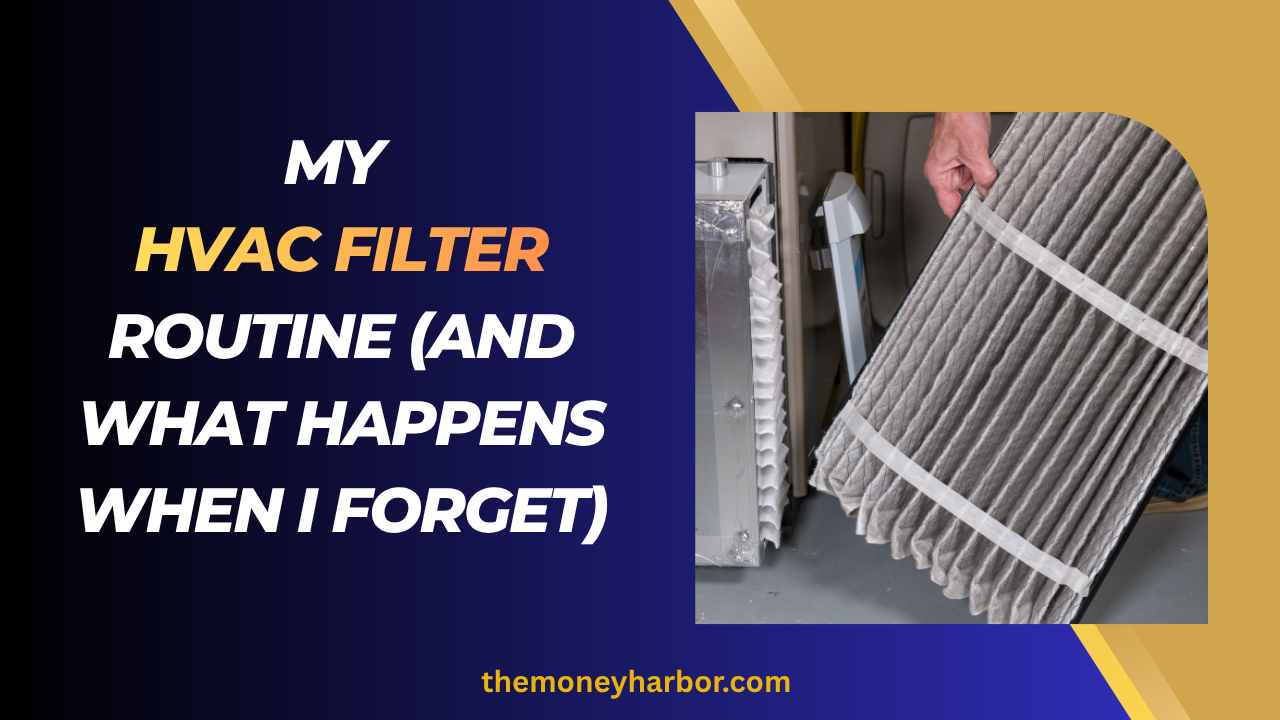
For the first couple of years in this house, I treated the HVAC filter the way I treated smoke detector batteries — something I knew mattered, vaguely, but never on any actual schedule. I’d change it when I happened to notice it looked dirty, which in practice meant months would go by without a thought. That worked fine until the month it very much didn’t.
Since then, I’ve put an actual routine around it, and I’ve also learned exactly what happens when that routine slips. Both halves feel worth writing down.
What My Routine Actually Looks Like Now
Checking Monthly, Changing on Its Own Schedule
I check the filter every month, but I don’t automatically replace it every single time. I pull it out, hold it up to a light, and if I can still see light coming through reasonably well, it goes back in. If it’s visibly gray or clogged, it gets swapped regardless of how long it’s been in. In practice, that usually lands me changing it every one to three months, depending on the season and how hard the system’s been running.
Tying It to Something Else I Already Do
I learned the hard way that “check it whenever I remember” doesn’t work as a system. What’s worked instead is tying the check to something else already on a schedule — I do it the same day I pay a specific recurring bill, so it’s attached to a habit that already exists instead of floating on its own.
Keeping a Small Stock on Hand
I keep two or three replacement filters in the house at all times, in the right size, so a low or dirty filter is never a reason to put the swap off for another week while I make a trip to buy one. That gap between “I noticed it’s dirty” and “I actually have a new one in hand” is exactly where procrastination used to creep in.
Writing the Date on the Filter Itself
A small thing, but a permanent marker note with the install date, written right on the filter frame, means I’m never guessing how long one’s been in. It also means anyone else who happens to check it — a partner, a house sitter, an HVAC tech during a service call — has the same information I do without having to ask me.
What Actually Happens When I Forget
The System Works Harder Than It Should
The most immediate effect is one I mostly felt rather than saw. A clogged filter restricts airflow, which means the system runs longer and harder to hit the same temperature. I noticed this mostly as a slightly higher utility bill over a couple of months before I ever noticed anything else was wrong.
Rooms Stop Heating and Cooling Evenly
This was the first concrete sign something was off. Rooms further from the unit started feeling noticeably warmer or cooler than rooms close to it, which I initially assumed was a ductwork issue before I pulled the filter and found the actual cause.
Dust Shows Up Where It Shouldn’t
A badly clogged filter stops filtering effectively and can start pushing more dust through the system instead of catching it. I noticed more dust than usual on surfaces throughout the house during the stretch I’d let a filter go too long, which in hindsight was a pretty direct sign.
The One Time It Actually Damaged Something
This is the part that actually changed my habits. I let a filter go for close to five months one winter, distracted by other things, and the restricted airflow contributed to the system freezing up. I came home to a unit that had iced over and stopped cooling properly, and it took a service call and a repair bill to sort out. The technician was polite about it, but pretty direct that a five-month-old filter was a meaningful part of the problem.
That repair bill is genuinely what got me to build the routine I have now. It was a fairly small, avoidable cost that I turned into a real one through nothing but neglect.
Why the Monthly Check Matters More Than the Exact Replacement Schedule
I used to think the goal was memorizing the “right” replacement interval and sticking to it exactly. What’s actually mattered more is the monthly check itself, regardless of whether it results in a swap that month. A filter that gets looked at every month rarely gets a chance to reach the point where it’s actually causing a problem, even if I don’t replace it on a perfectly rigid schedule.
Final Thoughts
This is about as unglamorous as home maintenance gets, and it took an actual repair bill to make me take it seriously. But it’s a genuinely small task with a real cost attached to skipping it, which is more than I can say for a lot of the other things on my maintenance list.
FAQs
How do I know what size filter my system needs? The size is usually printed on the frame of your current filter. If it’s worn off, your HVAC manual or a quick call to a service company can confirm it.
Does a more expensive filter mean I can change it less often? Higher-rated filters can sometimes go longer between changes, but they also restrict airflow more if left in too long, so it’s still worth checking monthly rather than assuming a higher price buys you a longer stretch of neglect.
Can a dirty filter really cause a system to freeze up? Yes — restricted airflow from a clogged filter is one of the more common causes of a frozen evaporator coil, which is essentially what happened in my case.
Is it normal for filter replacement frequency to change by season? Yes, systems that run harder during peak summer or winter months tend to clog filters faster than during mild spring or fall weather, which is part of why a monthly check works better than a fixed calendar interval.

